Friday, December 3, 2010

Redistricting Complicated in Arizona's 1st District

            With the Republicans recently capturing a huge amount of seats in the House of Representatives, they will have a major advantage when it comes to redistricting in the years to come. Republicans will undoubtedly attempt to redraw districts to make them uncompetitive and favorably drawn for their party. This strategy will cause a great deal of frustration for Democrats, but according to Thomas Brunell in his article examining redistricting, uncompetitive districts with likeminded voters are beneficial for constituency service and voter satisfaction. This may be difficult to pull off in Arizona’s First District, as it is very large geographically and has some interesting demographics.
Brunell’s article raises interesting observations about redistricting that are not always considered by the public. Many people might assume that redistricting is just another way for corrupt politicians to ensure they can be re-elected and that their party can maintain power. However, Brunell argues that map makers should draw districts that pack as many like minded partisans as possible, considering constituents are much happier with their representatives when they voted for them. Brunell points out that “trying to draw ‘competitive districts’ effectively cracks ideologically congruent voters into separate districts, which has the effect of increasing the absolute number of voters who will be unhappy with the outcome and dissatisfied with their representative.” It seems as though the ultimate goal for representatives, regardless of party, is to please their constituents and get re-elected, so perhaps Brunell’s theory could help raise public satisfaction of government if employed properly.
Brunell’s ideas about redistricting are thought provoking, but in a district like Arizona’s First it could be difficult to successfully implement. The district covers a huge area in Arizona, more than half of the area of an already large state. Furthermore, there is a significant amount of variety demographically that could be problematic to map makers. While the district is 65.8% white, Hispanic populations make up 16.4% and Native Americans are 22.6%. It would most likely take a drastic alteration of Arizona’s congressional districts to create a partisan congruous district in Arizona’s First.

Friday, November 19, 2010

Gosar Right in the Middle of Major Realignment

            Being a freshman is never easy, and in Congress it is no different. Recently elected Republican Paul Gosar will face quite an overwhelming task in his first term, but considering the recent overhaul of the House in favor of the Republicans, things should not be too bad. As Gosar and the Republicans are about to find out, when there is a major realignment in Congress, the majority has a powerful ability to legislate significant policy change.
            In Brady’s book Critical Elections and Congressional Policy-Making, he argues that when major realignments take place due to an election, several factors allow the majority party to initiate major policy change. First of all, the newly elected majority party feels that they have a mandate to instigate change, and due to the fact that they were elected on a key issue, it is a very cohesive party that is willing to work together. Gosar and the Republicans will surely take advantage of the current situation in Congress, and create policy favorable to Republicans.

Gosar hopes to get on a committee
of his choice

            A major element of Brady’s analysis of realignments is the drastic impact on committee membership. Committees will be reshaped with so many new members, particularly the influx of Republicans. An article from The White Mountain Independent discusses such matters and asks Gosar where he expects to be placed. Gosar indicated that he would like to be placed on the Energy and Commerce or Natural Resources Committees, due to their strong relevance in his district. Despite the relatively high prominence of those committees, Gosar expects to get what he wants. “In the past, freshmen wanting key posts would have a hard time, but we (GOP) have such a huge freshman class (replacing many Democrats) that this time we should get assignments.” Clearly the realignment theories discussed by Brady are coming to life here, as Gosar and his fellow Republicans should get unusually high rates of favorable placement in committees.
  

Thursday, November 4, 2010

Incumbent Kirkpatrick Booted From Office

             The results are in, and first-term incumbent Democrat Ann Kirkpatrick has been defeated by Republican challenger Paul Gosar in Arizona’s 1st. Gosar, a career dentist with no political experience, received 52% of the vote, with Kirkpatrick getting just 42%. Clearly, the national anti-Democratic attitudes proved costly for Kirkpatrick, as it did for the entire Democratic Party in Tuesday's House elections.


John Boehner is the new Speaker of the House

            As I predicted in my last blog, Gosar was going to win the race fairly easily, and he did. It should be noted how remarkable it is that he pulled off the win, considering a couple of months ago Kirkpatrick was the clear favorite. Gosar’s Republican rhetoric strongly appealed to the conservative district, and combined with the national political environment, Gosar was able to create a winning campaign. Conservative voters sent a clear message to the government yesterday that they are not happy with the way things are going. Gosar was among 60 Republicans who took seats away from House Democrats, enabling the Republicans to gain control of the House. The effect that such a radical shift in membership will have on legislation has yet to be seen, but surely there will be a great deal of gridlock in Congress over the next two years.

Gosar was a good dentist, will he be a
good representative?

              
           Gosar, a dentist, has a lot to prove once he gets to work in Washington. Considering his lack of political experience and lack of relevant work experience, Gosar will need to show his constituents that he was worth electing. His supporters are counting on him to join the rest of the freshmen Republicans in the House, and turn around the political environment in their favor.   

Friday, October 29, 2010

Gosar Acting Like an Incumbent

          In most congressional elections, the incumbent has a huge advantage, as reelection rates for incumbents are around 90%. Usually, incumbents try to be fairly passive and maintain their lead, while the challenger must be very aggressive in order to gain a similar level of name recognition. In Arizona’s 1st District, it seems as though the roles have been reversed. Democrat incumbent Ann Kirkpatrick has challenged Republican Paul Gosar to five debates, yet he has backed out of all of them. In a race where the incumbent has fallen very hard in the polls, Gosar just needs to protect his lead and I believe he will come away with the victory on Tuesday.

Kirkpatrick has not taken advantage of her incumbency

            According to Paul Herrnson’s book Congressional Elections, “the big leads most incumbents enjoy at the beginning of the election season make defending those leads the major objective of their campaigns. Incumbent campaigns usually focus more on reinforcing and mobilizing existing bases of support than on winning new ones.” It appears Kirkpatrick has done a pretty bad job of defending her huge lead, and now she is on the offensive, challenging Gosar to public debates, in an effort to change the public’s mind on the Republican challenger.

This should be Gosar on Election Day

            According to blogforarizona.com, Gosar has backed out of all five debates, a very strange strategy for a challenger. Herrnson points out that challengers usually need to have the aggressive campaigns, in order to build name recognition and give voters reason to support them. It appears that Gosar has been so successful at doing so far, and he does not want to do anything to hurt his chances. According to a blog on thehill.com, Democrats have been complaining that Republicans are trying to “run out the clock” for this election season. The blog points out that, “Many Republican challengers hold slender leads in the polls and don't want to put themselves in situations — exchanges with reporters, debates — where that could be jeopardized.” This seems to be Gosar’s current strategy, and based on recent polls, he will enjoy victory in this election.


Monday, October 25, 2010

Candidates Try Not to Beat Themselves


AZ's First District (in pink) covers a huge area

            It is widely known that political campaigns can be riddled with negativity and lies, and that politicians will do just about anything to get elected. Certain elements of this can be found in the race for Arizona’s 1st District. In a district filled with a wide variety of issues and many types of people, incumbent Democrat Ann Kirkpatrick and Republican challenger Paul Gosar are trying to appeal to constituents in any way possible, including the use of attack ads in many instances, and a general vagueness on the most controversial issues.  

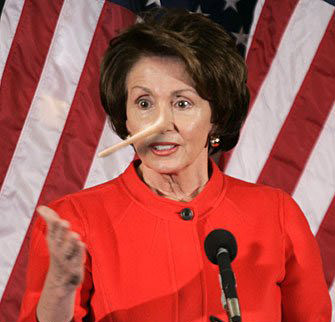
          Due to the many polarizing issues that are relevant in this election, the candidates in Arizona’s 1st are playing it safe on issue positions, not wanting to turn off potential voters. An article in the Arizona Daily Sun illustrates how campaign advisors are telling candidates to avoid taking too many positions on major issues because it is polarizing. Since actual issues are being avoided, there have been an abundance of attack ads. Gosar has been accused of being a flip-flopper, a mud-slinger, a “blatant” liar, and an out of touch millionaire who has evaded taxes. Kirkpatrick has also been accused of lying, along with supporting reckless policies and having “fallen lock-step with Nancy Pelosi.”
 

Gosar hopes voters feel this way about Pelosi 

            The dangers of being too specific on policy positions are especially grave in a district with many polarizing issues. According to Sydney Hay, a former Republican candidate for the House in the district, she was advised to poll name recognition above hot issues, and that she would adjust her message depending on the town she was speaking in. “In mining towns, I would talk a lot more about natural resources issues than I would talk about that in Prescott," Hay said in the same Arizona Daily Sun piece. It seems as though Gosar and Kirkpatrick are following the lead of Hay and most other congressional candidates, in that they are playing it safe on their own issues, but wildly attacking each other’s views.

Saturday, October 16, 2010

Challengers Need to Get Their Name Out

             Incumbents typically enjoy victory in congressional races, as it is very difficult for challengers to get their name out there and convince people to vote for them. The key for challengers to create a competitive election is by making voters aware of their virtues, while proving that the incumbent has serious shortcomings. However, this can only be achieved if the challenger has the campaign finances to get their name and message out there. In Arizona’s First District, Republican challenger Paul Gosar has been successful at raising money for his campaign, and is using it to bolster support for himself, while turning the tide against incumbent Democrat Ann Kirkpatrick.
            
               In The Politics of Congressional Elections, Gary Jacobson stresses how difficult it is for challengers to succeed in congressional elections. Incumbents have the major advantage of name recognition, which is crucial in elections where voters typically do not know too much about the actual policies of the candidates. Jacobson mentions how incumbents do not lose elections by failing to garner support based on general performance. They lose when challengers are able to successfully project of positive image of themselves, and persuade voters that the incumbent is a liability. Gosar has successfully done this by appealing to the conservative district with his Republican rhetoric, and by deriding Kirkpatrick as a loyalist to the "socialist" policy initiatives of President Obama and Nancy Pelosi. Gosar has come very far in a district that was "leaning Democrat" in early September, as The Hill, a Washington D.C. newspaper, recently released a poll that gave Gosar a 46 percent to 39 percent lead.

              Jacobson stresses how important campaign fundraising and spending is for challengers to spread their name, and Gosar has done just this. According to a Politico.com article, Gosar is in line to receive a combined $1 million from the "60 Plus Association" and "Americans for Prosperity". This donation is a tremendous boost for Gosar, as he is taking away the financial edge that incumbents usually enjoy away from Kirkpatrick. Gosar will now be able to significantly increase ad campaigns down the stretch, and reach as many potential voters as possible throughout the next few weeks leading up to Election Day.

Thursday, October 7, 2010

How to Promote Your Own Campaign While Bashing Your Opponent


           A candidates’ ability to communicate with their targeted supporters is a very important aspect of a congressional election. Candidates must be able to convey a message to potential voters regarding their persona and policy stances, while at the same time finding effective ways to bring down their opponent’s campaign. So far in the race for Arizona’s 1st District seat, Republican challenger Paul Gosar has been very successful at maintaining a clear, consistent message regarding his policy. In terms of negative campaigning, both Gosar and incumbent Ann Kirkpatrick have been going back and forth at each other trying to portray the other negatively.


Glenn Beck would certainly approve of Gosar's campaign message

            In Paul Hernnson’s book Congressional Elections, he points out that a well run campaign puts forward the same coherent message at all times. Gosar has done a tremendous job of appealing to conservative voters with his unfailing right-wing rhetoric. Gosar portrays himself as a small-business owner with a traditional conservative agenda. Gosar favors private health care, low government spending, protecting gun rights, and permanently reinstating the Bush tax cuts. Kirkpatrick on the other hand has struggled with the message she wants to send to voters. As a Democrat trying to appeal to a relatively conservative district, Kirkpatrick has stated her disapproval with Obama. Furthermore, according to an article from October 5th in the Arizona Republic, Kirkpatrick has voted with her party 86% of the time, which is a very low percentage.
 

Kirkpatrick has been turning on her fellow Democrats lately

            While Gosar has succeeded at promoting his own campaign, he is less effective when it comes to bashing Kirkpatrick. Gosar has tried to portray Kirkpatrick as a loyal, liberal ally of President Obama, and also points out her vote for the stimulus bill, and the health care bill. That being said, Kirkpatrick really is not that liberal, as proved by her relative lack of support for party policies. Kirkpatrick has tried to frame Gosar as a millionaire who has been late on his taxes, which quite frankly is a ridiculous tactic. Kirkpatrick needs to focus on more relevant issues if she wants to be successful in this campaign.